Urmika | Architecture of Waves | Bamboo Pavilion at Raichak
Client: Mr. Harsh Vardhan Neotia
Project Typology: Bamboo Pavillion
Ground coverage: 300 sq. ft
Status: Built | 2025
Principal Architect: Ar. Udit Mittal
Architects: Ar. Nina Pestel, Ar. Nandini Jalan
Structural Analysis: Ar. Laurent Fornier
Construction & Site Supervision: Rahul Singh and Aejmol da & team
Photography: Kounteya Sinha
Client Brief
The client wanted a comfortable outdoor seating space—one that would allow the family to enjoy the garden and river while staying protected from both sun and rain. Given their strong inclination toward natural materials and sustainable design, they reached out specifically for a bamboo canopy. They wanted a structure that not only served its functional purpose but also blended seamlessly with the surrounding trees and natural landscape. A true nature lover, the client wished to be immersed in nature while remaining sheltered from nature, creating a harmonious balance between comfort and the outdoors.
Bamboo Pavilion at Raichak — Architecture of Waves, “Urmika”
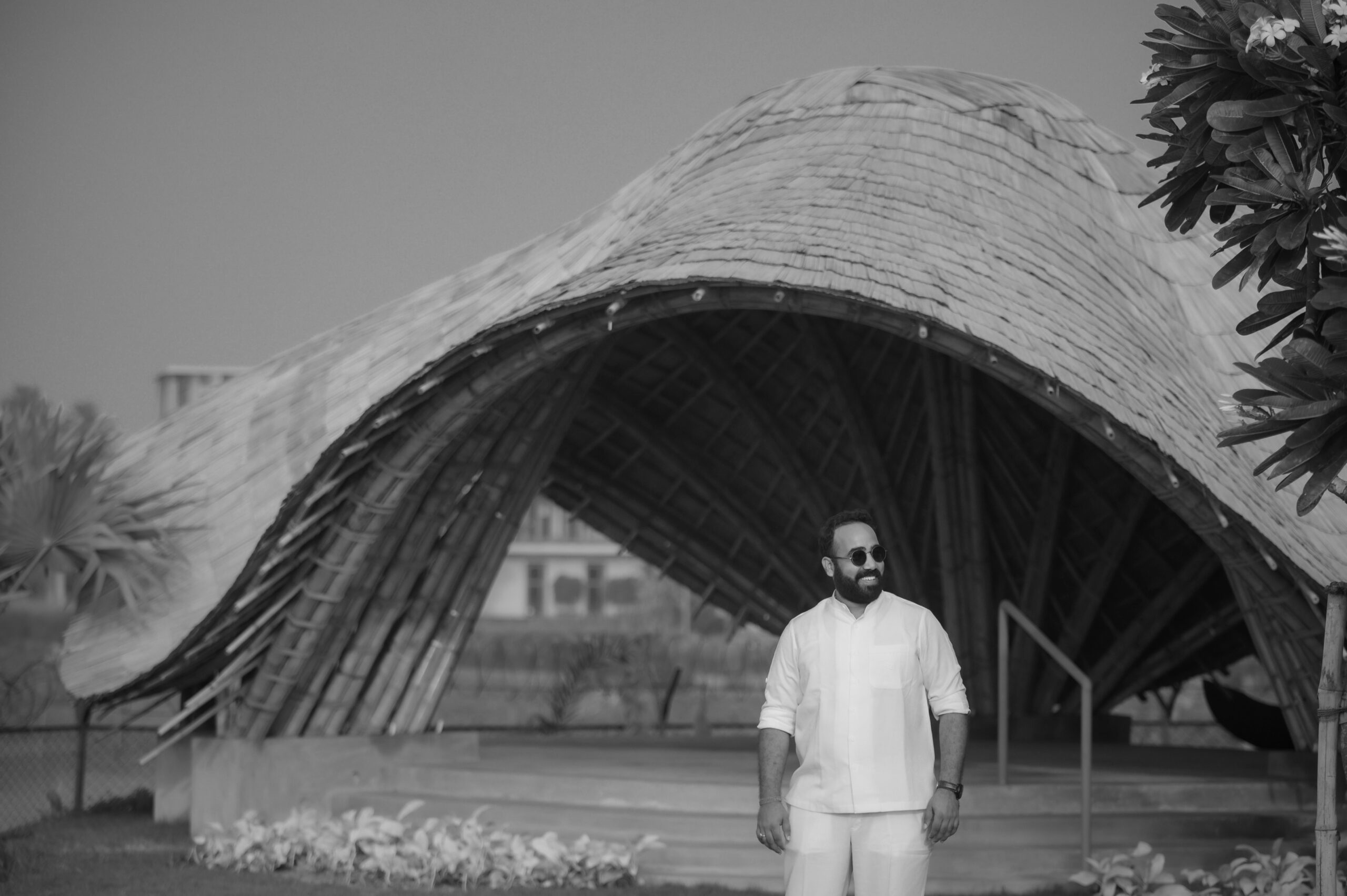
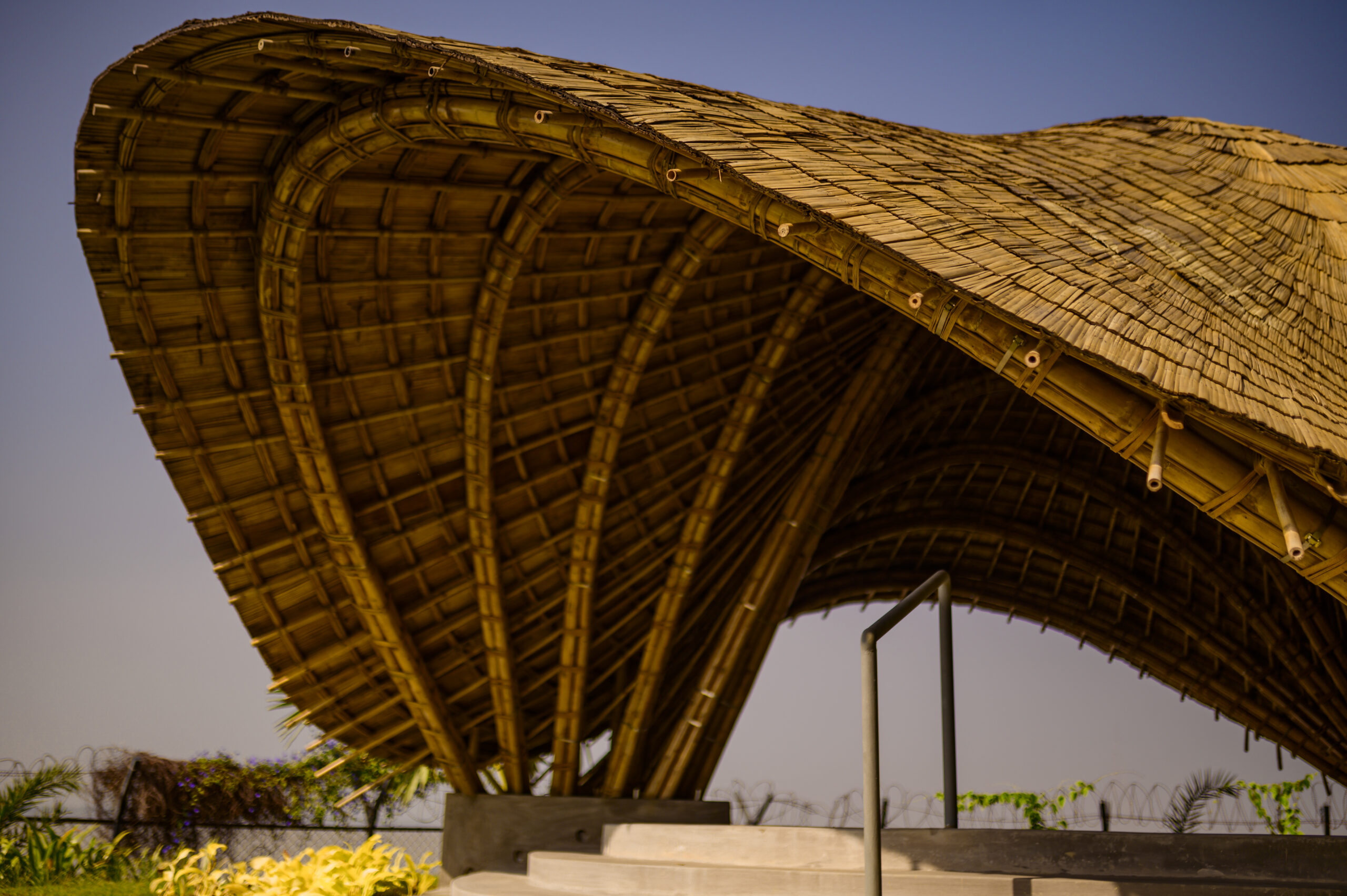
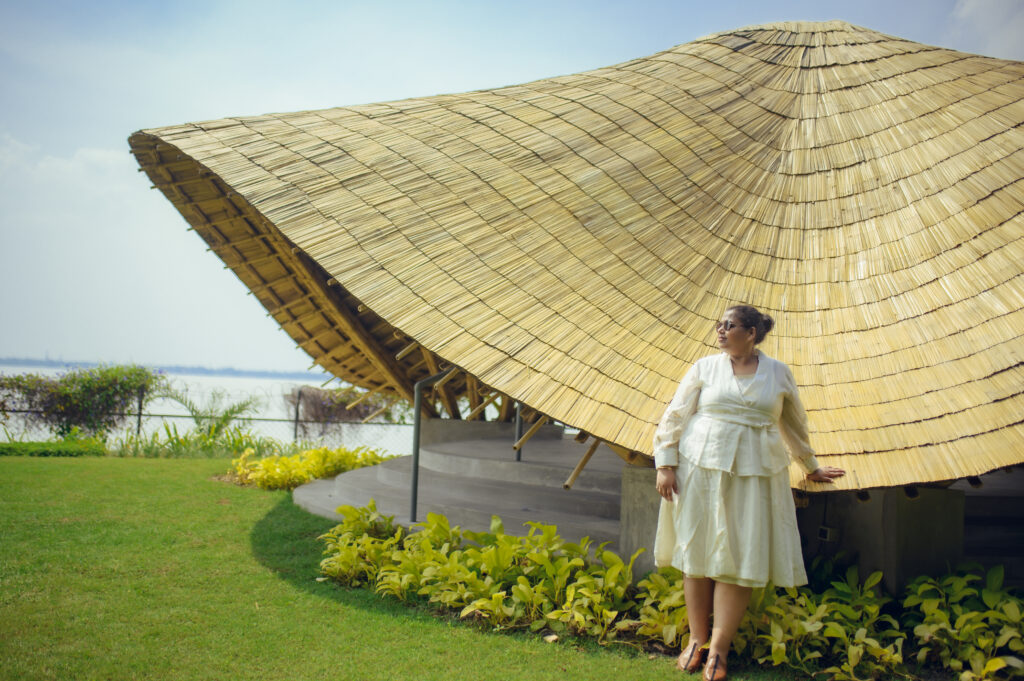
“Urmika” derives from the Sanskrit word “urmi,” meaning wave — a gentle ripple, a subtle undulation, a form shaped by movement. The pavilion embodies this idea, echoing the quiet, continuous rhythm of river waves in both spirit and form.
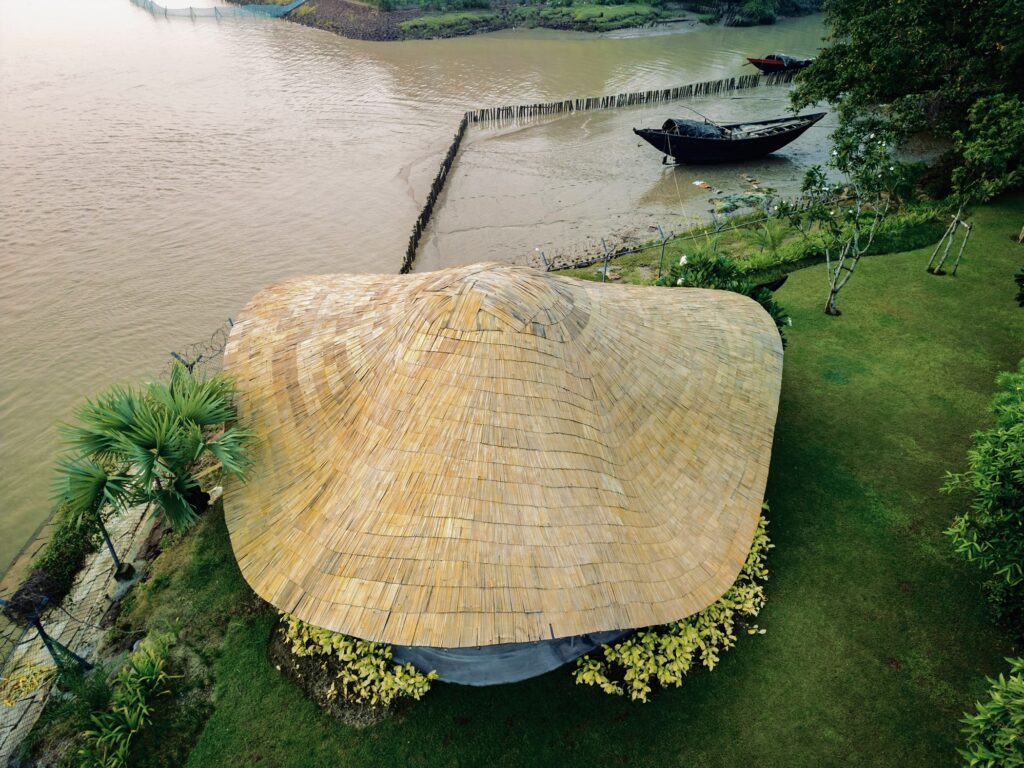
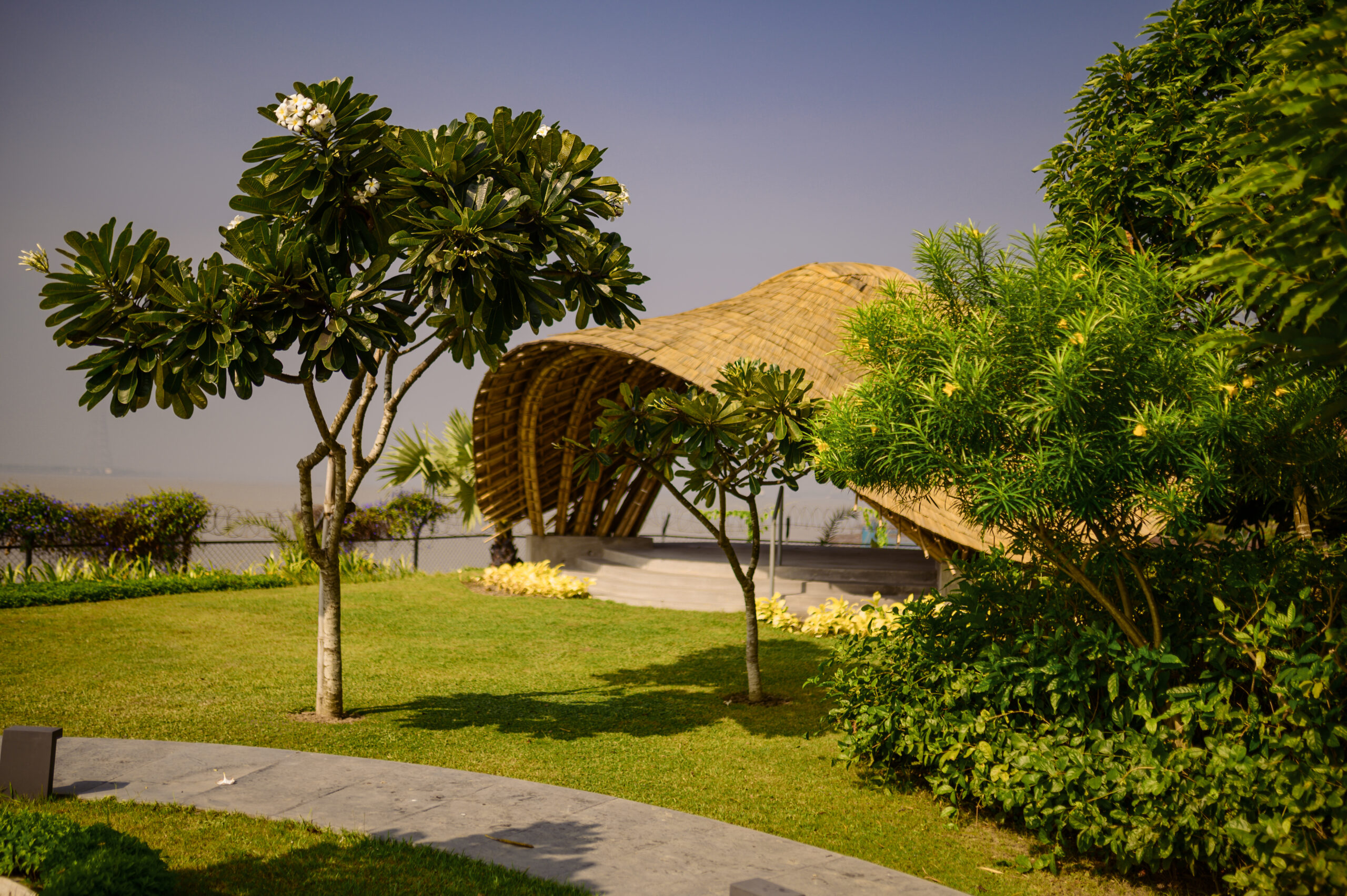
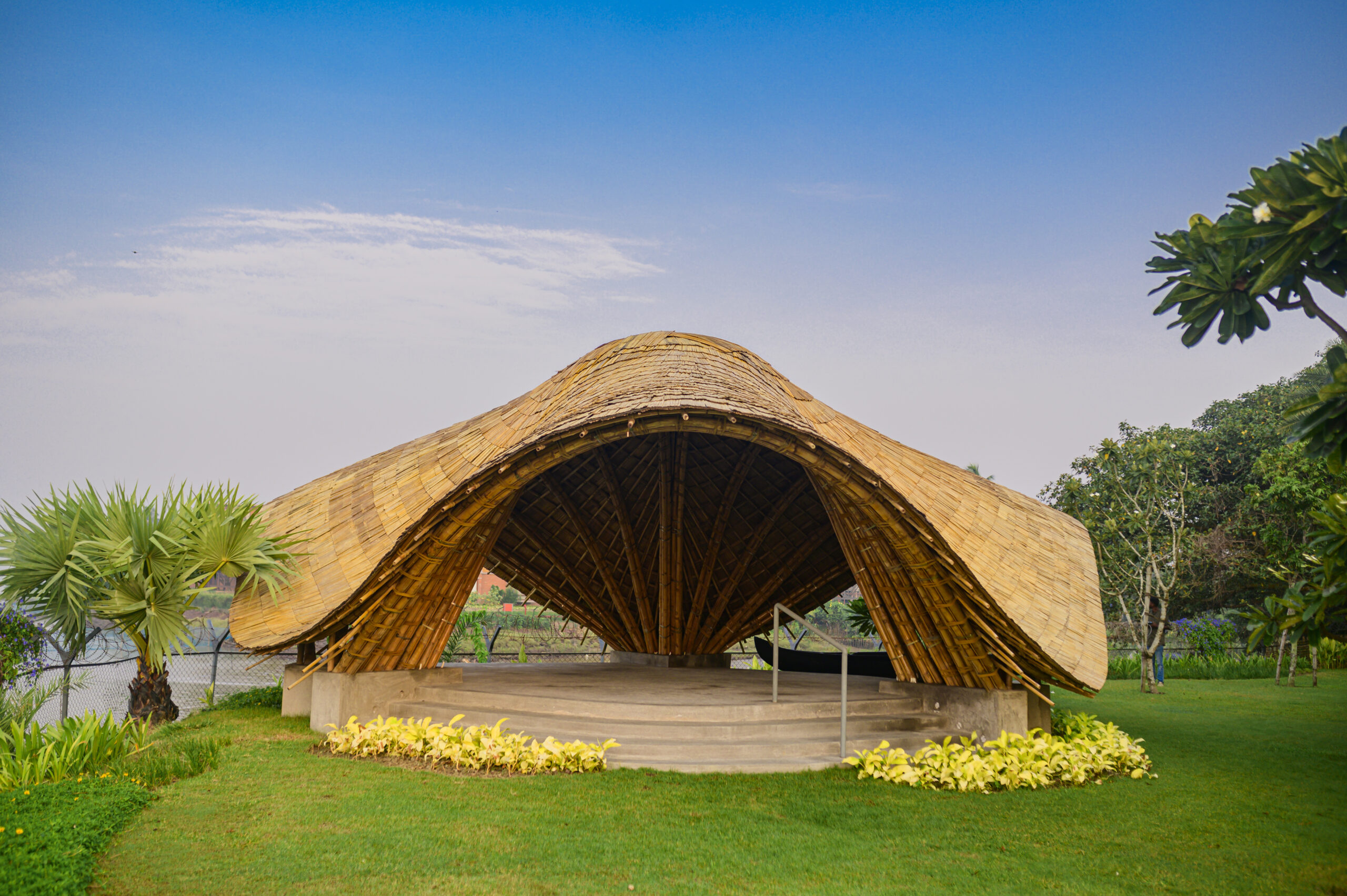
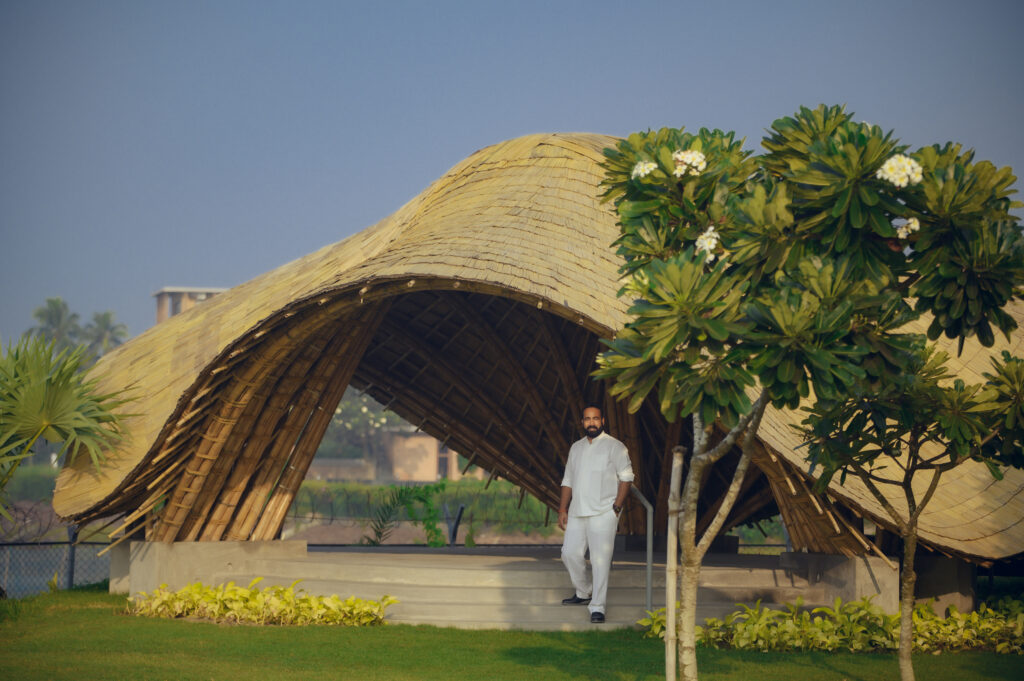
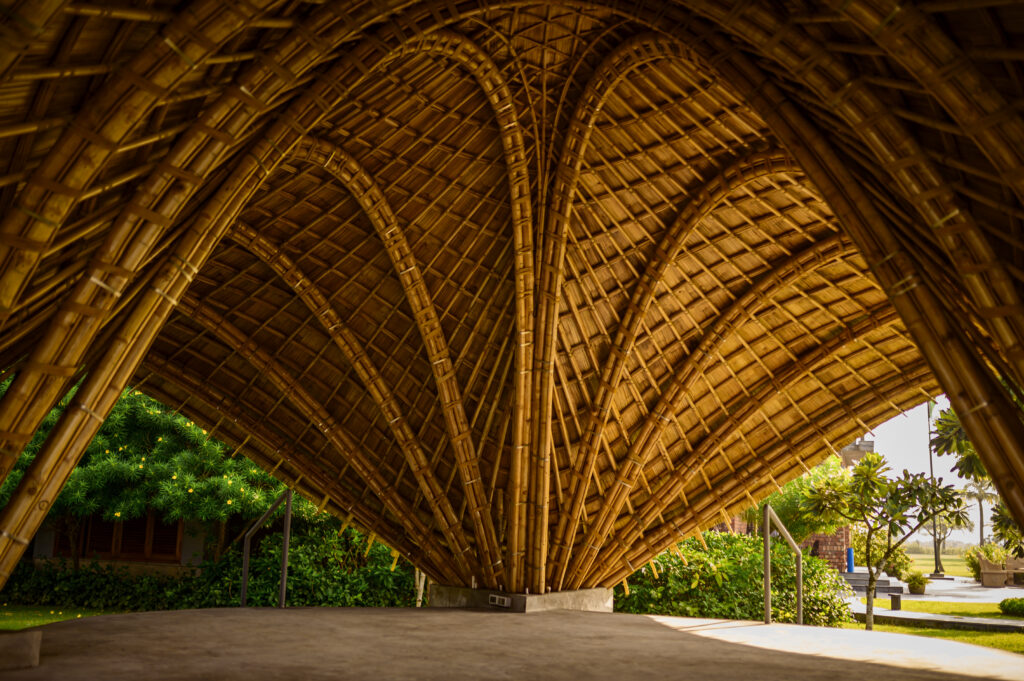
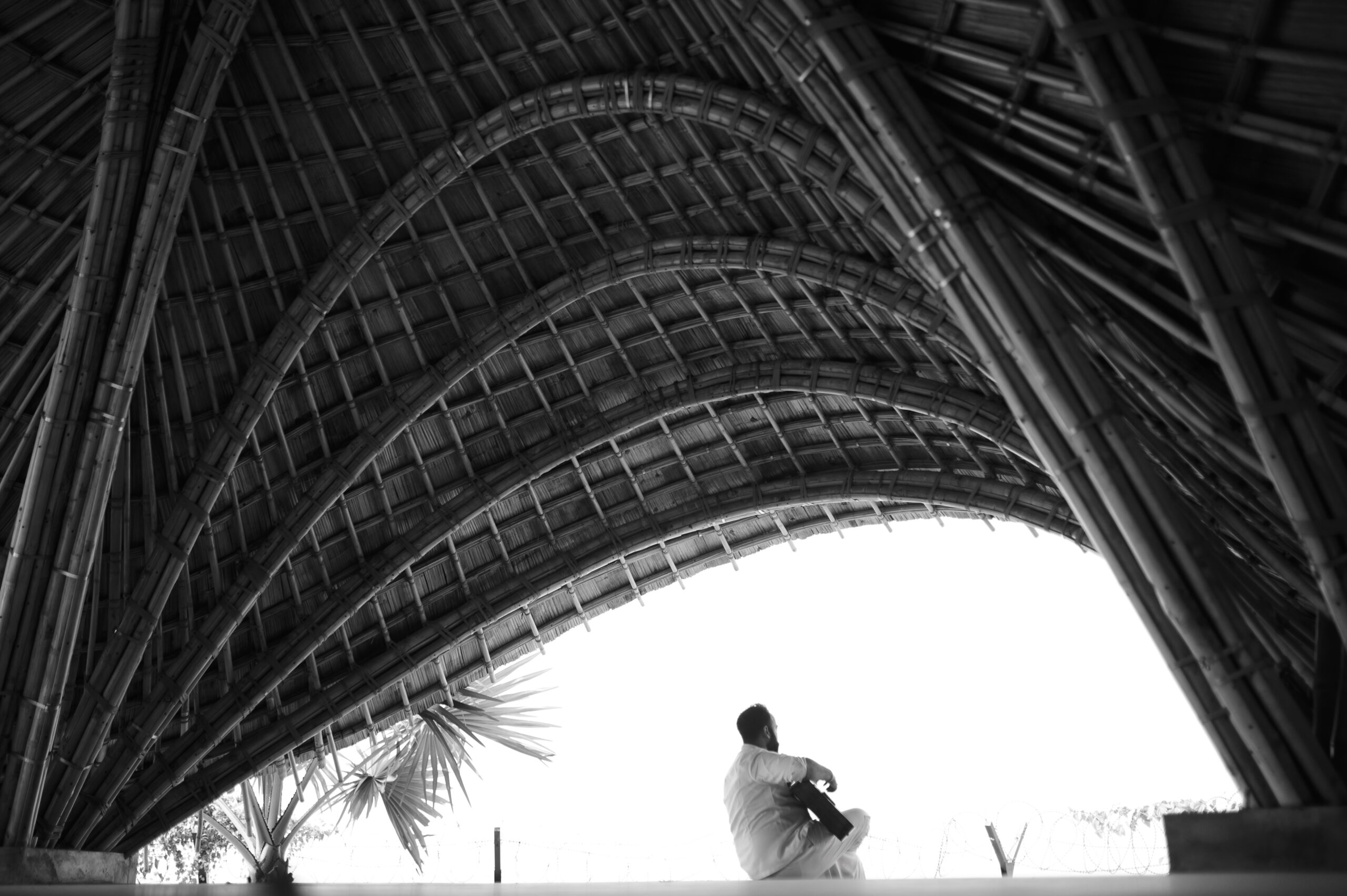
Set against the tranquil backdrop of the Ganges in Raichak, this bamboo pavilion was envisioned as an extension of the landscape for the private residence of Mr. Harshavardhan Neotia. Designed to be viewed directly from his study, the pavilion’s sweeping curves and bamboo-shingle roof echo the fluid movement of the river, allowing the structure to settle naturally into its surroundings. With its harmonious five-arch system and open configuration on three sides, it becomes a quiet pause within the garden—an architecture of waves that converses gently with both river and sky.
Concept and Inspirations
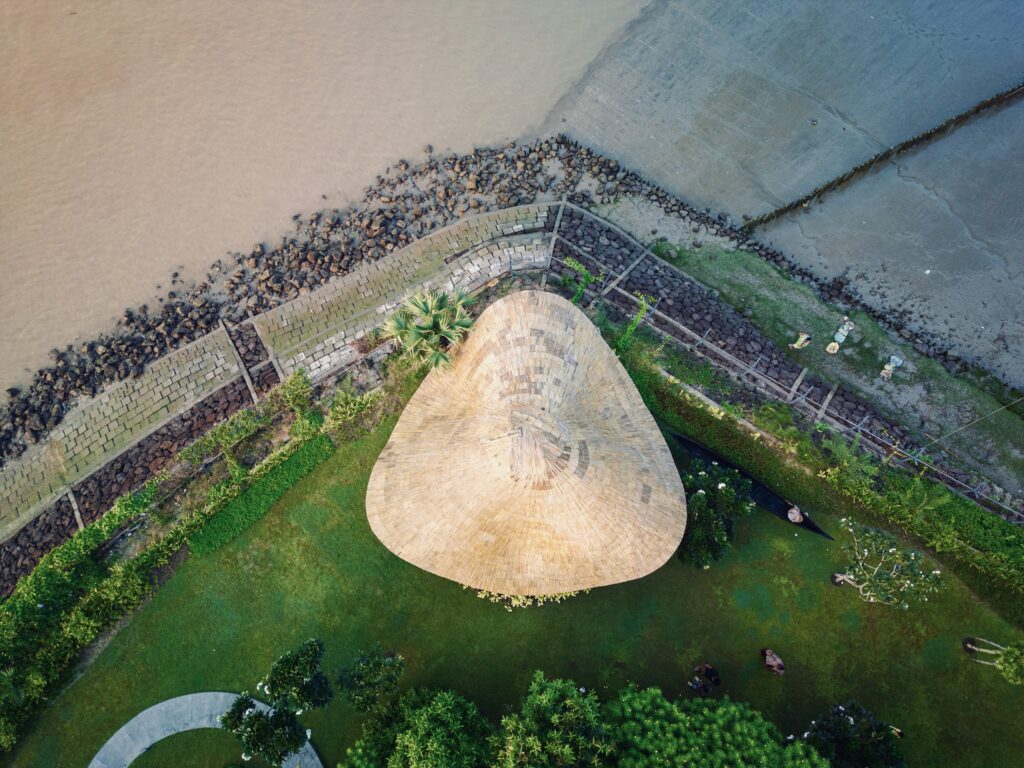
The design draws from two elements that define the site: the rhythmic waves of the Ganges and the soft, clustered forms of bamboo clumps growing in the garden. The core idea was to create a contemplative pause point that would not obstruct movement through the landscape. Three openings were aligned with three significant sightlines from the residence—one framing the setting sun along the corner axis of the plot, and the other two opening toward the gardens on either side.
Site Geometry and Spatial Configuration
Located at the corner of the site, the pavilion emerges from a triangular base whose three sides are precisely aligned with the landscape and the river’s edge. This triangular footprint acts as the foundation beam, from which the corners extend as intersecting lines. These extensions evolve into pedestals that anchor the bamboo arches, grounding the fluid form in a clear geometric logic.
Materiality and Construction
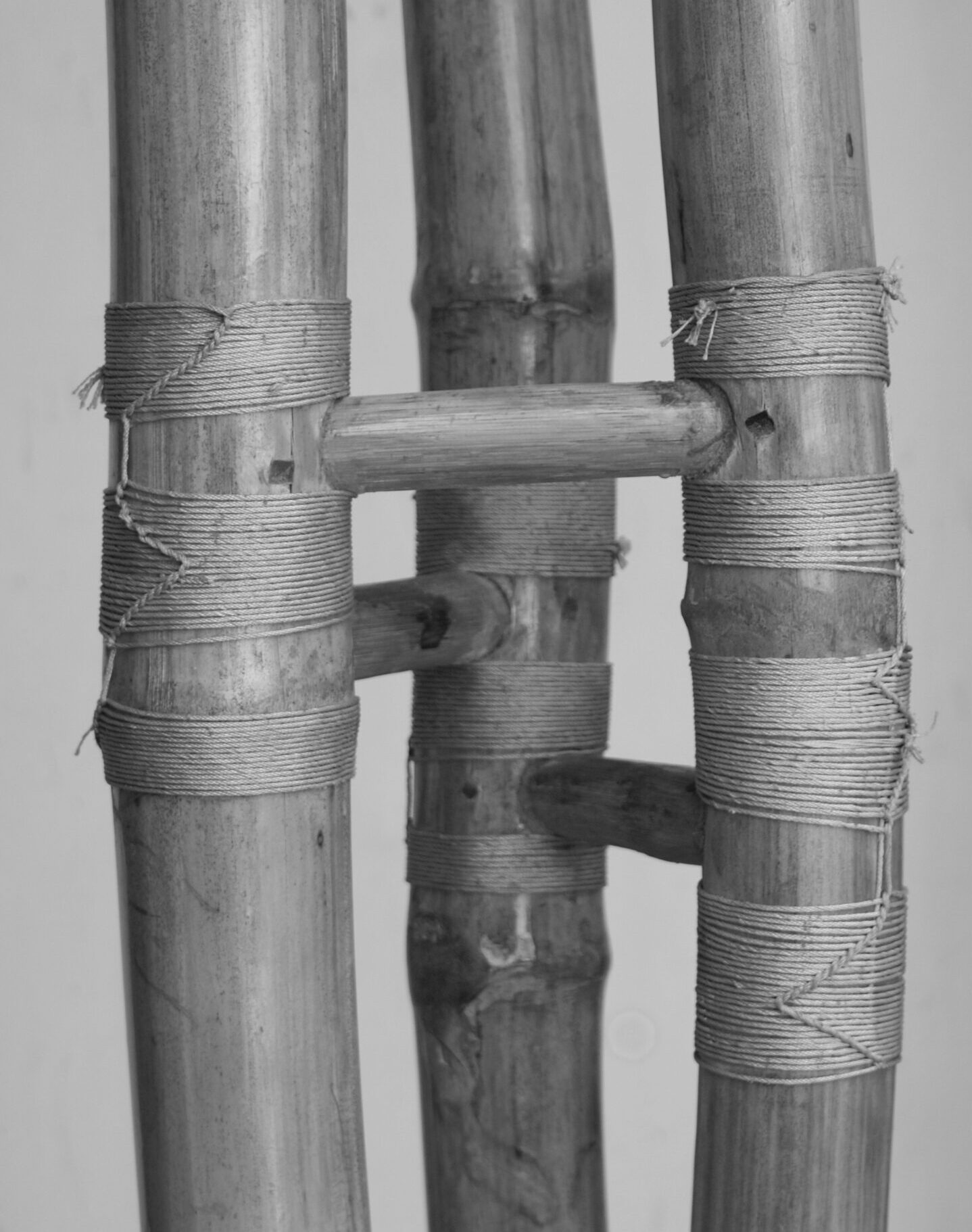
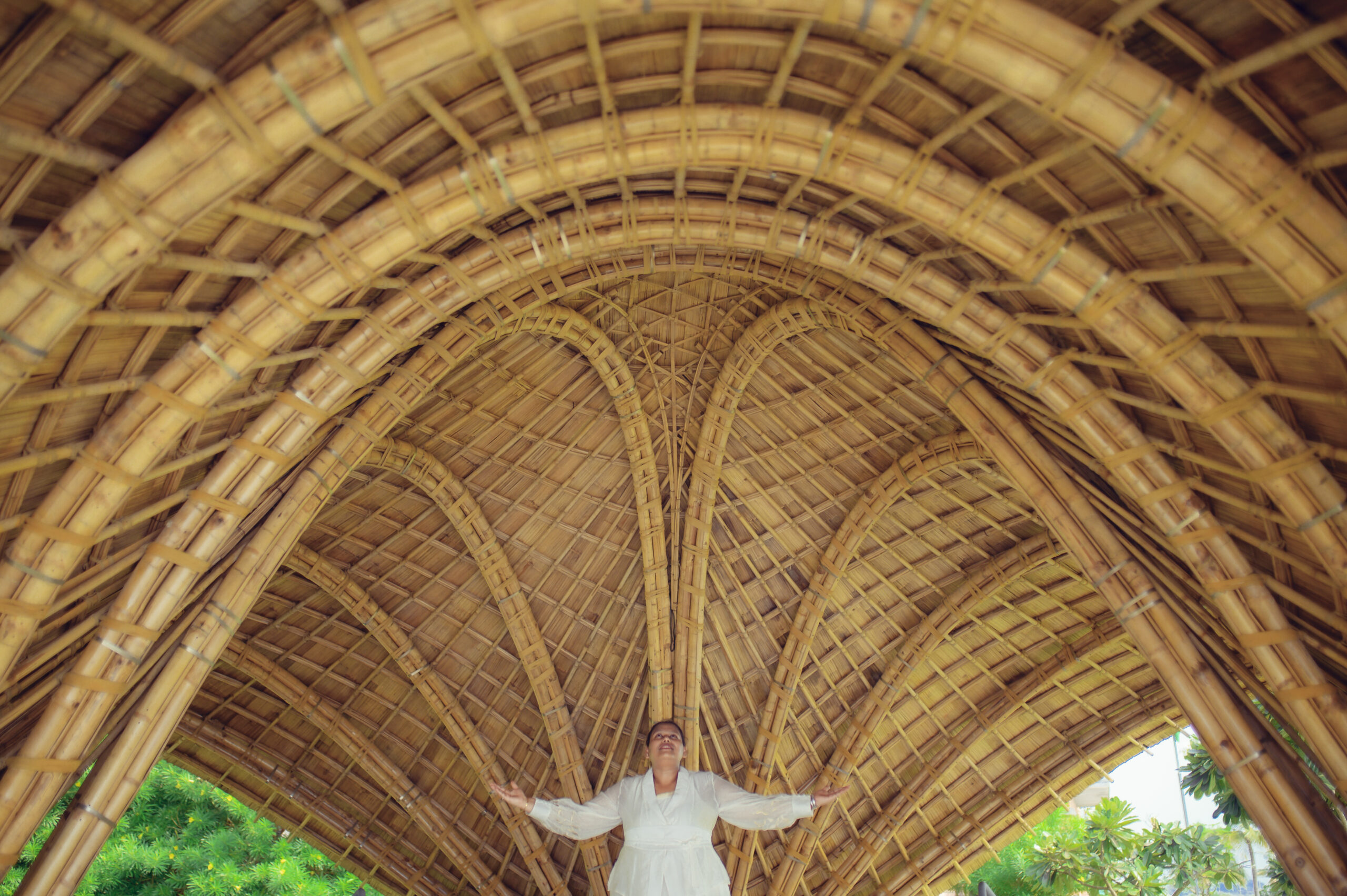
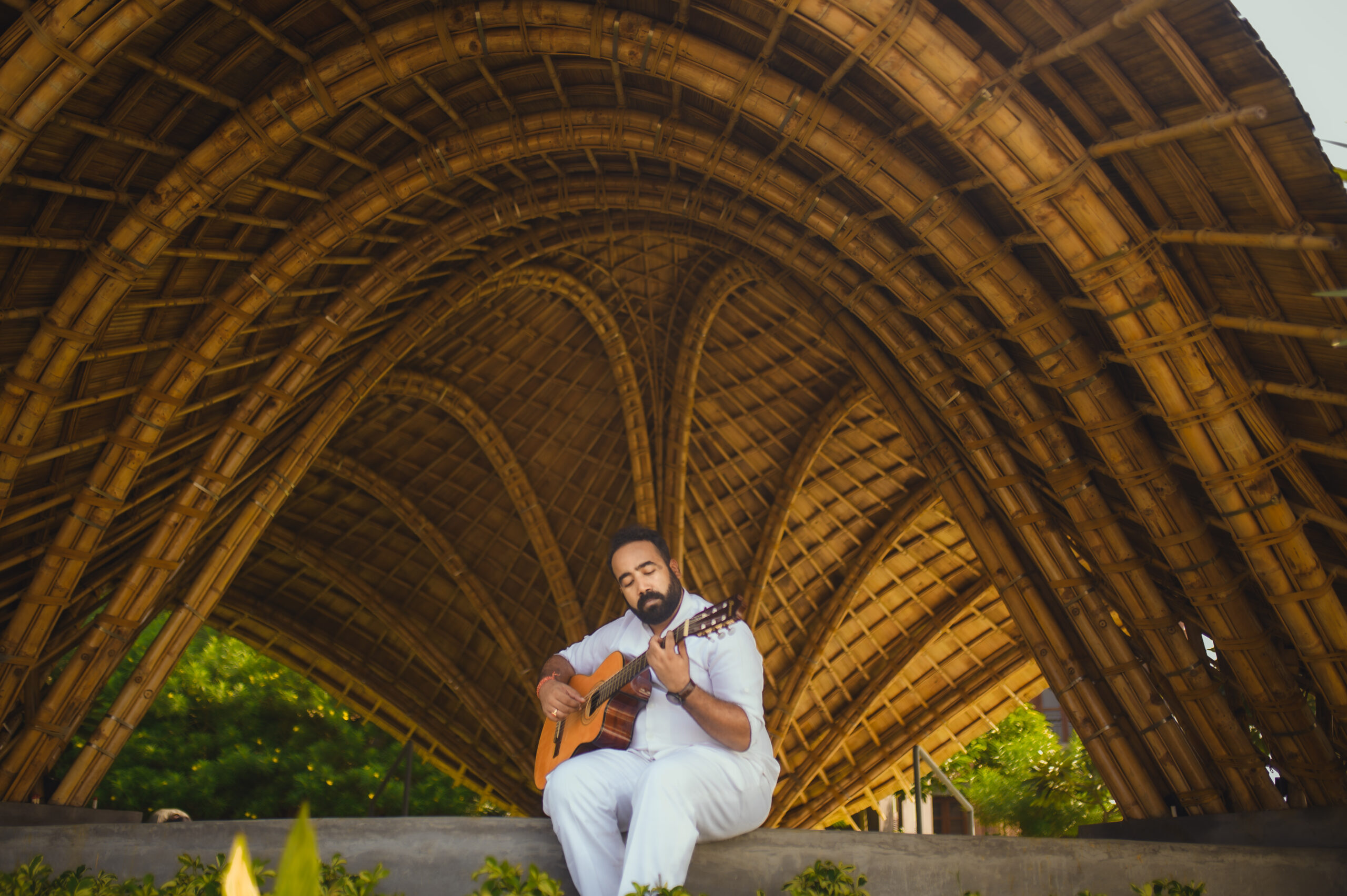
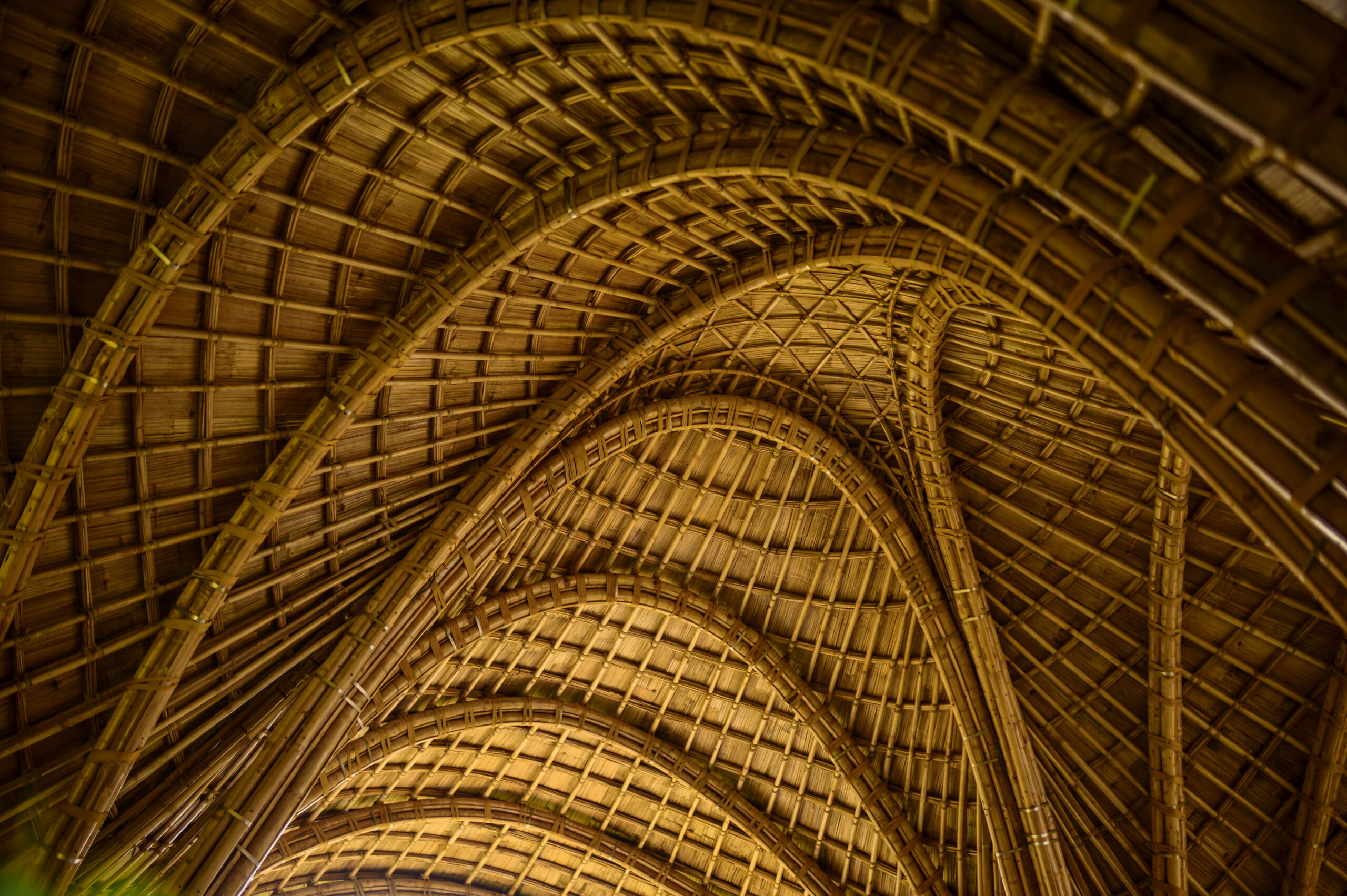
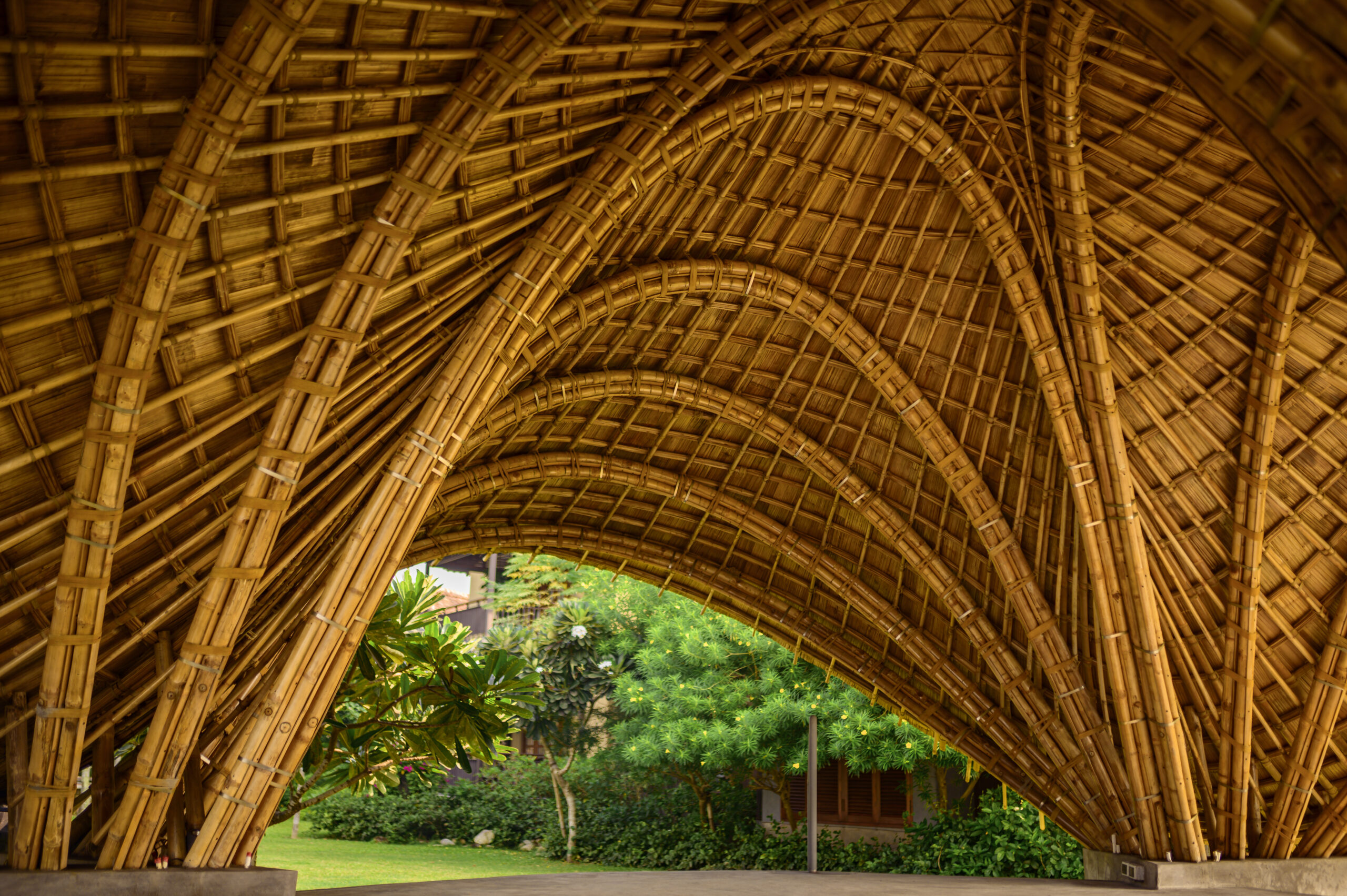
Bamboo—used as both structure and skin—is the principal material. The construction system employs bamboo arches anchored to the foundation through steel rebars, followed by bamboo rafters that brace the arches and create a stable framework for the roofing. Bundled bamboo lidi provides the secondary support required for laying the flattened bamboo shingles that form the outer skin.
Stainless steel straps bind the arches, adding a subtle visual contrast while symbolising an honest dialogue between natural and industrial materials. The palette is intentionally restrained: the roof retains the natural colour of bamboo, and the platform is finished in a smooth, monolithic cement surface that grounds the form quietly within the landscape.
Design Ethos
We do not design through predefined stylistic labels, nor are we guided by formal categories. If there were to be a name for a style shaped by love for nature, inspired by its forms, soft in expression yet strong enough to stand the forces of the outdoors—this pavilion would belong to it.
Craft, Technology, and Collaboration
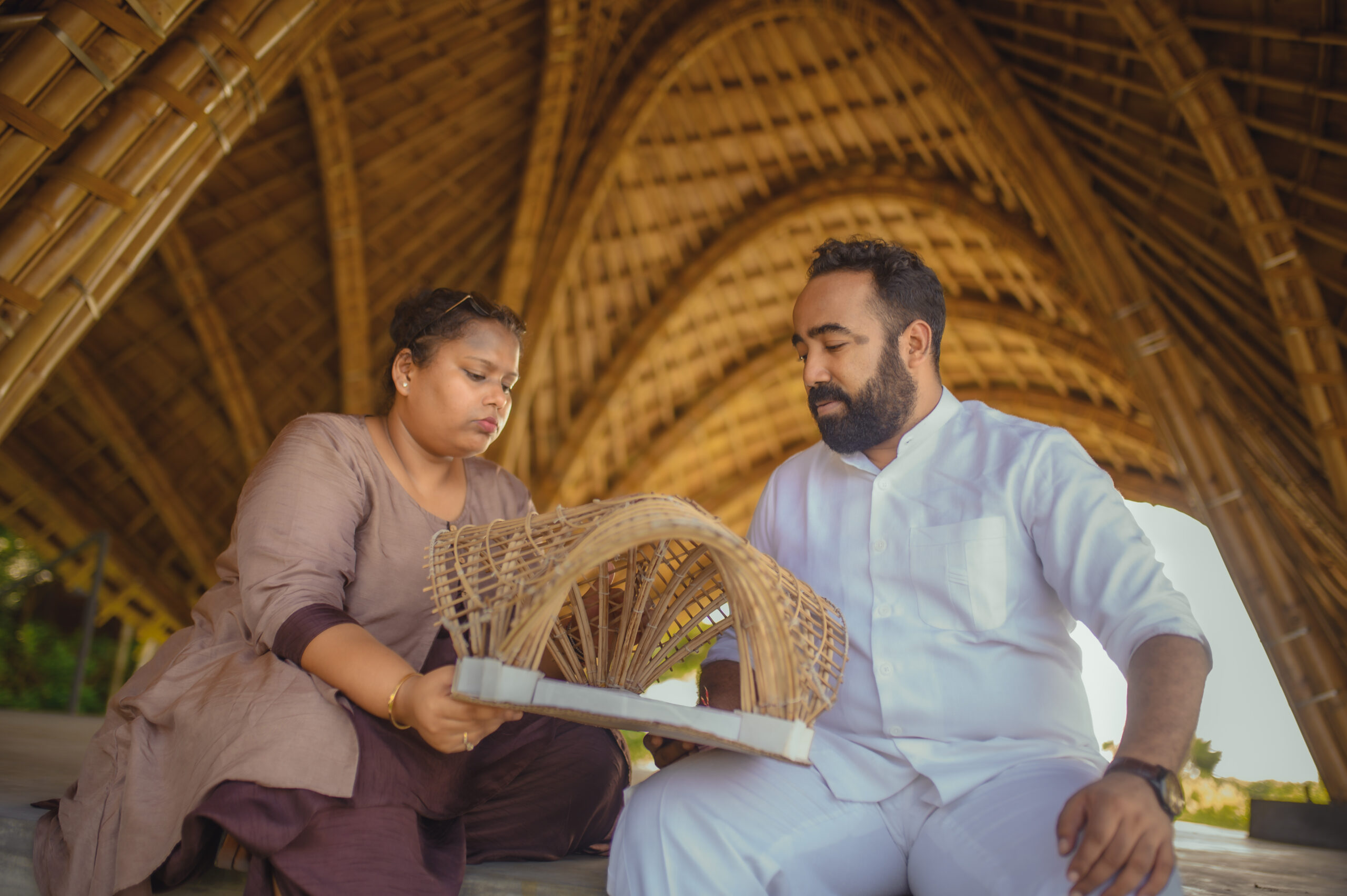
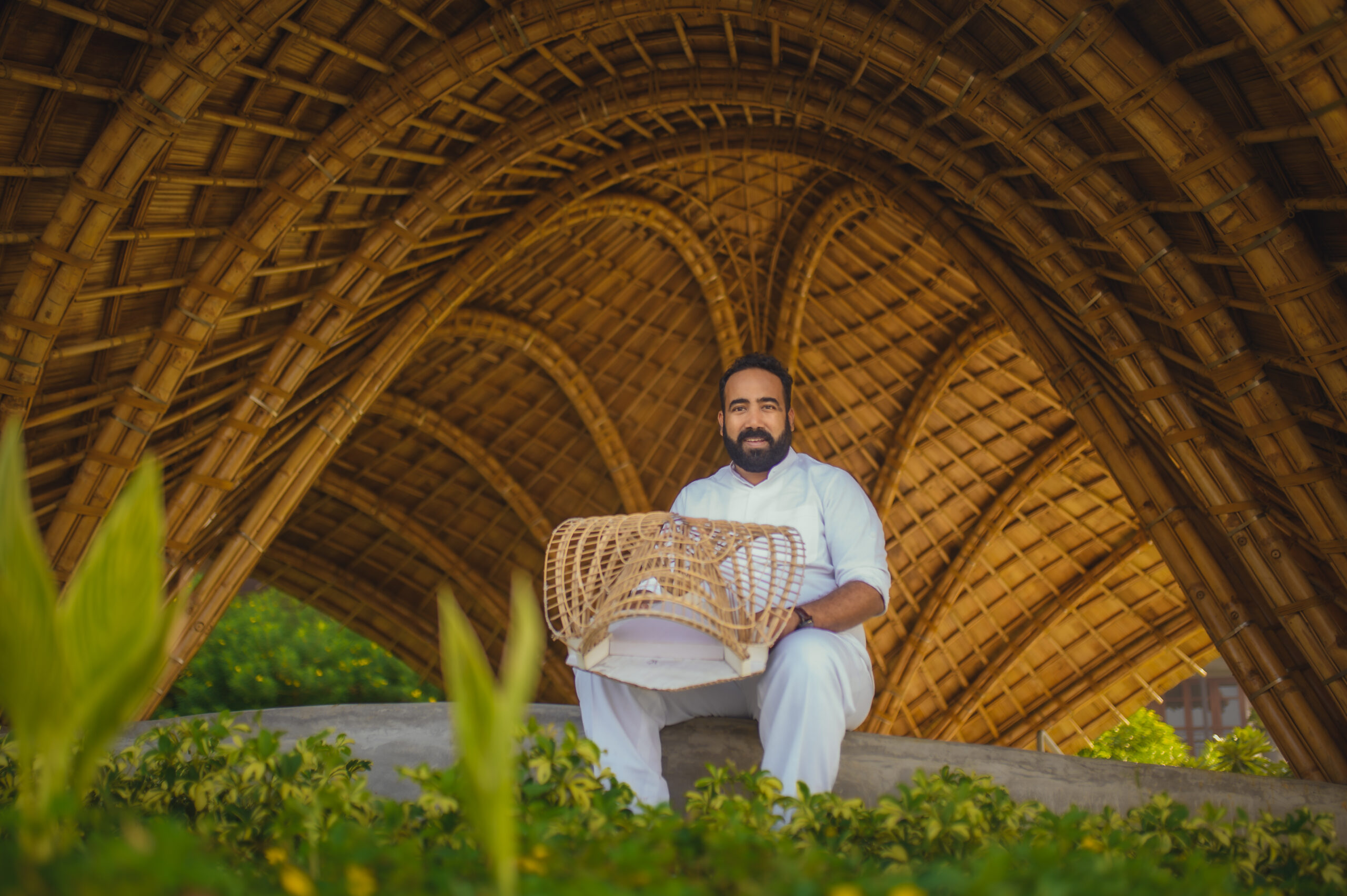
The project is an example of bamboo’s architectural potential when guided by advanced computational tools and executed through the hands of skilled artisans. It brings together sustainability, expressive form, engineering precision, and the deep craftsmanship available in India.
More than a structure, it is a testament to what emerges when natural materials, digital design, and human hands work in unison.
Let's build a greener future together.
Connect with us today.
We're here to bring your sustainable architectural dreams to life. Whether you're interested in collaborating on a project, learning more about our bamboo innovations, or simply have a question, we'd love to hear from you.
Company
Spaces
Quick Link